
LIFE STORIES OF UKRAINIAN REFUGEES IN THE REPUBLIC OF MOLDOVA

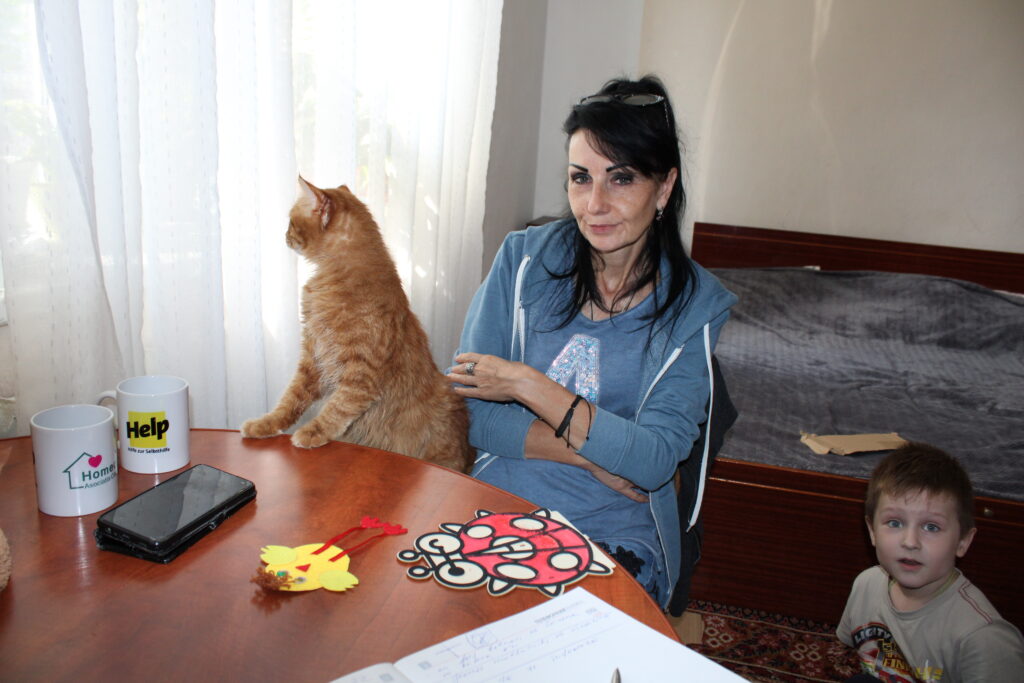
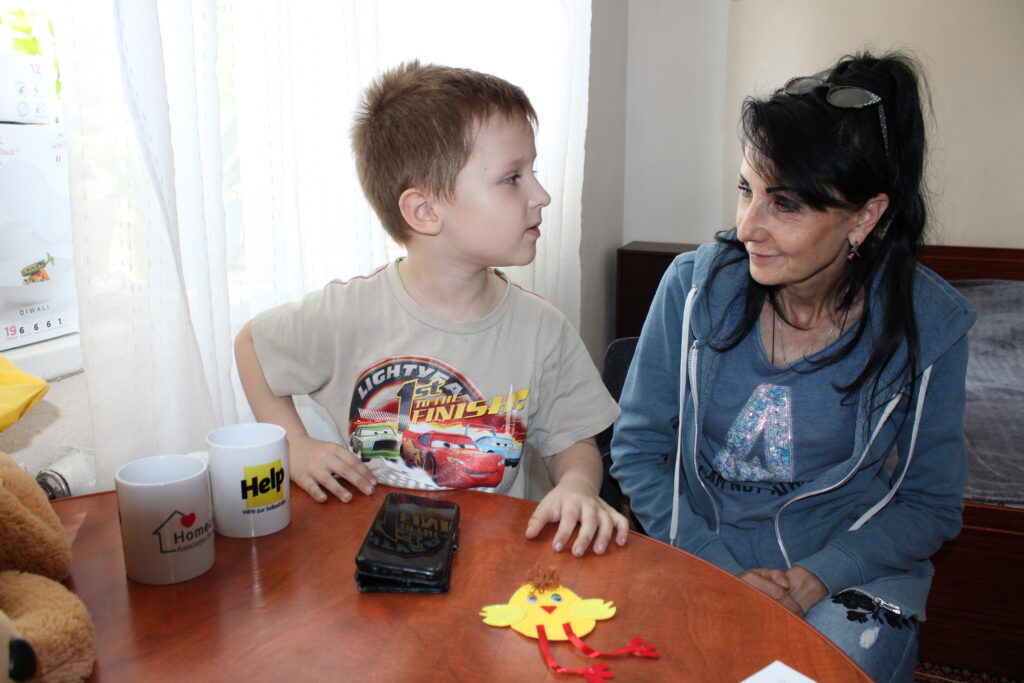
“After a month of staying in the basements, I understood that there is no local conflict – it’s a real war in which innocent people are dying. One morning the Russians intentionally bombed the church we often went to, they fired from tanks at the people who came to the service – then we realized that the occupiers will not spare anyone and the time has come for us to take the path of wandering” – these were the first testimonies heard from Victoria, temporarily settled with her daughter and grandson in the municipality of Bălți, when I returned to her family to offer them the aid provided for in the Project “Medical and Social Services for Ukrainian refugees from Moldova – Phase III”, financed by the international organization Help – Hilfe zur Selbsthilfe e.V.
Chaos, fear and helplessness reigned on the streets of Kiev on February 24th, 2022 when Russia invaded Ukraine. Victoria recounts that the bombing did not stop, and the tanks of the invaders had reached the very edge of the city: “We actually didn’t know where to run because bombs and rockets were falling everywhere. Everywhere you looked you saw burning houses, dead people in the streets, heard screams of pain and despair. The basement of the block, used as a refuge, had become our second home. One night, under the shrill sound of sirens, a rocket wiped the neighborhood church off the face of the earth. The blast knocked us all to the floor. That’s when we decided it was time to go.”
They intended to take refuge in their villa in Makarov (a village west of Kiev) but on the way people told them that the town was in ruins – as the boot of the “Russian liberator” had already stepped on it – practically all the houses were destroyed, and alive were left only the inhabitants who had managed to flee or remained hidden. Then Victoria’s husband, who is now with the Ukrainian army, decided to send his family to Moldova.
At night, Victoria (1972), her daughter Marina (1992) and grandson Nicolai (2018) boarded the evacuation train going to Chernivtsi. “I will never forget that trip. In the train and on the platform there was not a single light, thousands of women and children leaving for nowhere, saying goodbye to the hundreds of men who remained to defend their country. There was only one question in everyone’s eyes – will we ever see each other again? I could not hear a word around me – everything was happening in absolute silence for fear of attracting the fire of the occupiers’ artillery.”
After 2 days of travelling by train, they arrived in Chernivtsi, from where, with the help of Ukrainian and Moldovan volunteers, they moved to Balti. The first days were the hardest for Victoriei’s family: “We were afraid of foreigners – we thought there was no more humankind left in this world. But the kindness, patience and openness of the Moldovans helped us to return to normal, to believe in humanity. The ladies at Homecare were our guardian angels. They supplied us with food, hygiene products and essential medicines. They helped us get temporary protection in Moldova. They guided us when we were in trouble. I’ll be honest – we couldn’t survive here without your help.”
Already for the second consecutive year, the members of the “Homecare” Association are actively involved in the management of the refugee crisis. With the help of The Medical-Social Rebeca Center team from Bălți town, the Ukrainian refugees are successfully settling in, as evidenced by Victoria’s confession by which she answered the question where her daughter is now: “I never thought that we would have the strength to start a new life in Moldova which, little by little, is becoming a second homeland for us. Grandson Nicolai is getting ready to go to kindergarten. For this we had to give him all the vaccines that we were unable to administer in Ukraine due to the war. My daughter Marina, a psychologist by profession, is looking for a stable job, and at the moment she is in Ukraine to change her last name – here, in Balti, she found her love and got married.”
The Homecare team wishes the newlyweds, Marina and Pavel, “a long lasting marriage” and never forget that asking, giving and receiving help is human and natural in a society that knows what compassion means.
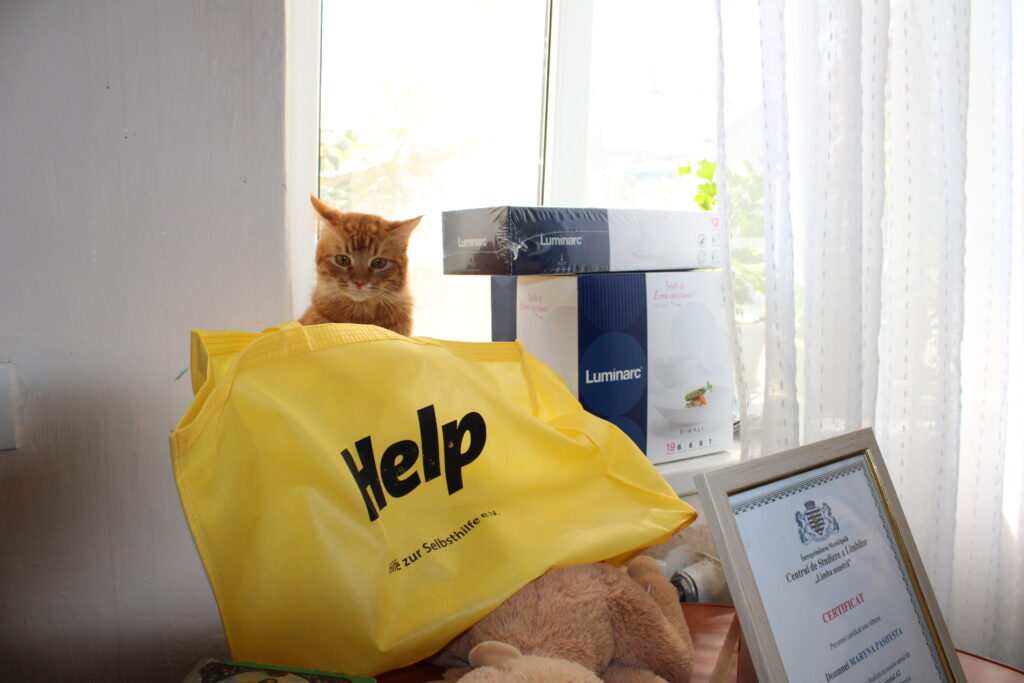
The activity is part of the project “Medical and Social Services for Ukrainian refugees from Moldova – Phase III”, financed by the international organization Help – Hilfe zur Selbsthilfe e.V., and its main goal is to support 200 refugee families who are settled in the rural areas of the Republic Moldova, by facilitating their access to health and social protection services.
Distribuie acest articol:


